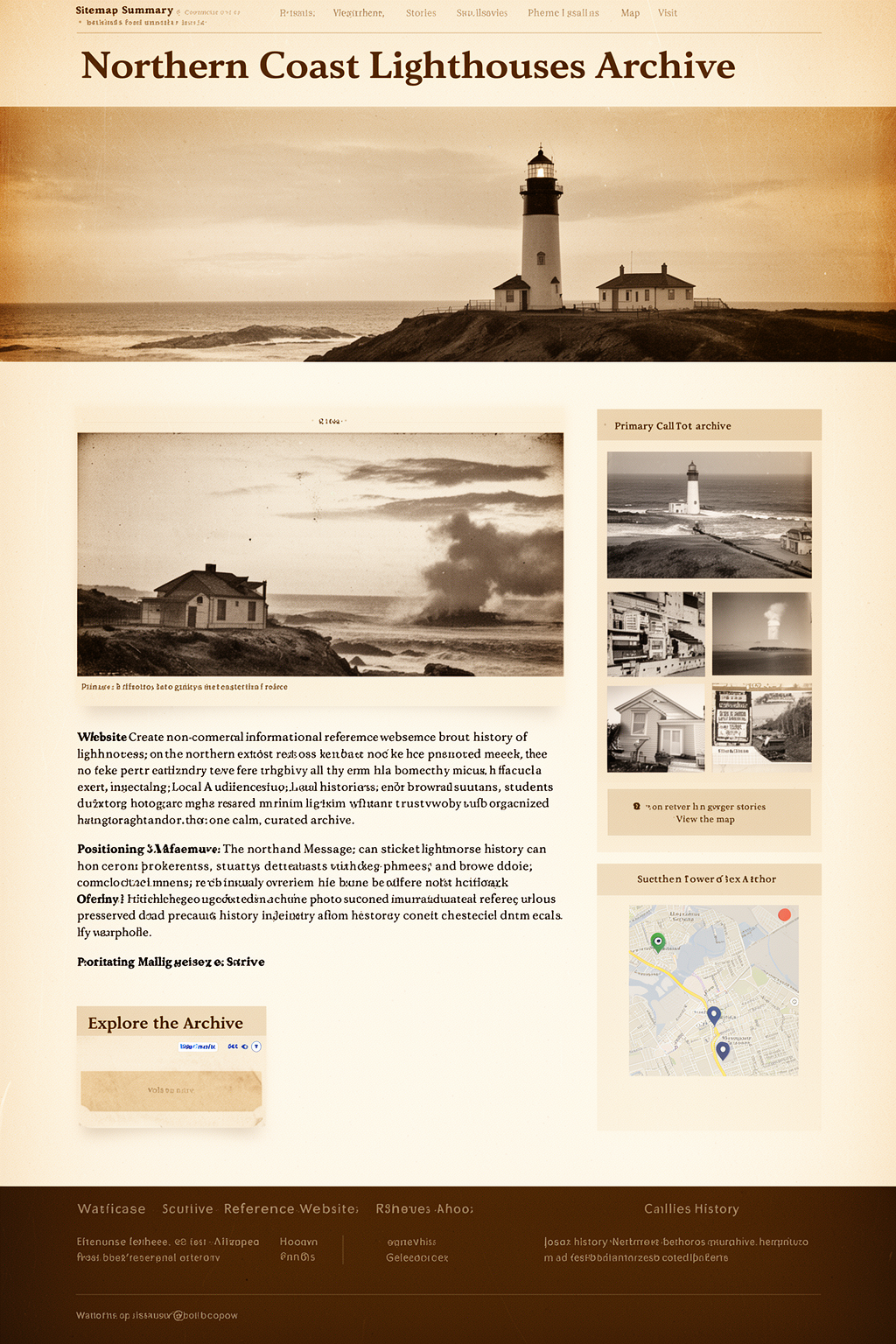
A shoreline timeline of signal, service, and preservation
Across two centuries, lighthouse work along the northern coast shifted from urgent construction to careful conservation. These six phases trace how towers were built, adapted, automated, and ultimately protected as shared heritage.
1820s–1840s
Foundations on hazardous headlands
Early towers rose at reef entrances and storm-prone capes where wreck reports had become routine. Built with local stone and lime mortar, these first lights established fixed coastal reference points for pilots entering northern harbors.
1850s–1870s
Lens innovation and expanded coverage
Introduction of precision lenses increased range and made each beacon pattern easier to identify at sea. Additional minor lights and range markers filled dangerous gaps between major stations, creating a more continuous guidance system.
1880s–1910s
Keeper communities and station life
Stations grew into small working compounds with oil houses, fog-signal sheds, and family quarters. Logbooks from this era reveal disciplined routines alongside weather hardship, giving the archive its strongest human record.
Archival plate, c. 1900: a granite watchtower above the surf line.
1920s–1950s
Mechanization and wartime vigilance
Fuel systems, improved optics, and radio links gradually reduced manual strain while extending operational reliability. During wartime years, selected lights were dimmed or screened, reflecting changing coastal defense priorities.
1960s–1980s
Automation and station transition
Remote monitoring and automated lamp changers transformed daily operations and ended many resident keeper postings. As service models shifted, several station buildings entered uncertain periods of underuse and weather exposure.
1990s–Today
Preservation era and public memory
Heritage groups, municipalities, and volunteers stabilized surviving towers and documented endangered ones. The current archive phase links photographs, stories, and mapped sites so preservation can remain active, shared, and evidence-based.